



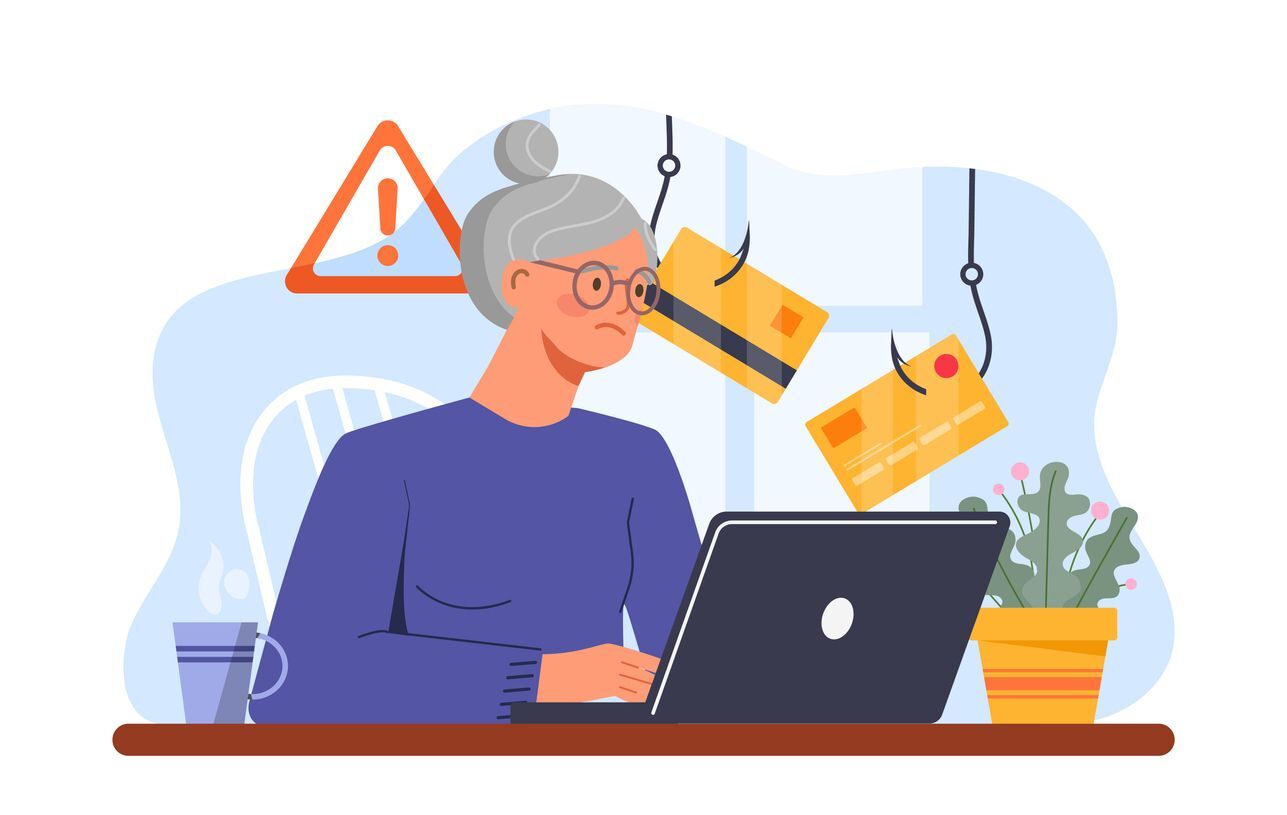
Cyber fraud is expanding at a staggering pace—U.S. losses alone reached over $16.6 billion in 2024, while global cybercrime costs climbed past $1 trillion and are projected to exceed $10 trillion annually, with more than 2,200 cyberattacks occurring every single day – one attack every 39 seconds according to Statista. People over age 60 lost nearly $5 billion, making seniors the most financially impacted group. This is mostly due to the demographic having higher accumulated savings and potential assets, as well as a perceived lack of understanding with current technology.
This time of year, post-holiday/pre-tax season, sees scam attempts ramp up. Phishing, whereby the scammer impersonates someone trusted in order to gain your information, remains the top attack choice, with 1,003,924 phishing incidents recorded in Q1 2025 alone. Scammers take advantage of the abundance of shopping taking place, and people scrambling to get their tax information in order. Adding to the confusion, many corporations re-evaluate their security protocols during the new year, forcing users to update their passwords and personal information. As if this time of year weren’t stressful enough.
Fortunately, there are some easy tips to make sure you stay aware and safe from fraudsters.
Slow down. Before you respond to any email or make a payment, hover (hold your move or for texts hold your finger) over the link to see if it matches the supposed sender. Make sure the reply email matches the person you’re supposed to be speaking with.
Think before you click. Never click on an unsolicited link in any email. If you didn’t request it, delete it.
Odd grammar/punctuation. Many spammers autogenerate emails and texts and try to get your attention. You may see too many – or not enough – capitalizations, odd turns of phrase (Cheers instead of Thank you), or just poor grammar in general. Feel free to delete it.
Verify before trusting. If you are concerned that your account may have been compromised, don’t attempt to rectify the situation using notifications or emails. Go directly onto the site for the account you feel may have an issue and check your credentials as well as your account for unauthorized activity.
Government agencies don’t call. If you are on the phone with someone claiming to be from the IRS or Social Security looking for information or payment, this is a red flag. If there is an issue with your information, your first contact will be via mail. Before giving them any information, ask them for their contact information and tell them you’ll call them back. Most fraudsters will try to keep you on the line – feel free to hang up.
Urgency should arouse suspicion. Scammers rely on panic to be successful and give you short time windows to react. Always ask to be able to contact them back if over the phone; if via email, just delete it.
Odd requests = scammer. If you’re being asked to pay in crypto, or in gift cards, the reason is that it can’t be traced. Legitimate businesses prefer a paper trail.
Stay updated. Keep your account credentials safe (never share them) and keep them updated. Utilize additional security features such as multifactor authentication wherever possible.