

September means back-to-school season, but boy, do those school days look different now! It wasn’t all that long ago that many areas only used one-room schoolhouses. Here in Clifton Park, each neighborhood had their own schoolhouse. By the mid 1800s, Clifton Park had 16 school “districts”.
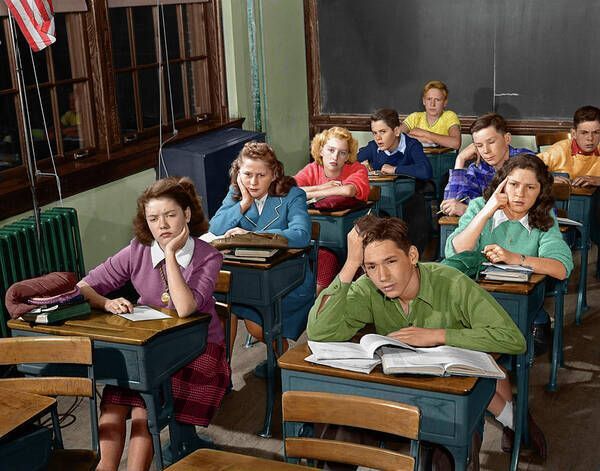
A typical schoolhouse had an entrance with hooks for the students’ coats and then opened into the classroom, usually arranged in four rows of double desks and benches. The desks varied in size, with the smallest ones at the front. The teacher’s desk stood on a raised platform at the front of the room with a blackboard. A high stool stood next to the desk for any student that couldn’t behave properly. A large pot-bellied stove sat in the center of the room. A bench in front of the teacher’s desk hosted 12 or more students for lesson recitation, and other benches lined the edge of the room for visitors during special events. Maps often decorated the walls. An outhouse near the woodshed served as the restroom, and every day, someone would get a bucket of fresh water from a nearby neighbor with a single dipper that was used for all the students in kindergarten through eighth grade, which ranged from about 25-30 students per school.
School hours were 9am-4pm with an hour for lunch and two 15-minute recesses. Students ate lunch at their desks and would go outside to play until they heard the school bell ring at 1:00, calling them back in.
The centralized campus of the current Shenendehowa School District opened in 1953, removing the need for the one-room schoolhouses, but other towns kept theirs for even longer. These now abandoned buildings are lost treasures, many of which have been saved and repurposed all over the country for things like town halls, libraries, or private homes.
Coburg Village resident, Rudy Hellenschmidt, remembers when he moved to Woodstock, NY in 1957. While Rudy was used to city-style public schools, the centralized high school there had recently opened in 1954, so most of his new friends had grown up in one-room schoolhouses. “Their whole world had changed!” said Rudy. They’d gone from having only one or two teachers and a classroom of 20 or so mixed-aged students to changing classes for each subject and a graduating class of 55 by 1959. But after the Woodstock Festival and a new IBM plant opened in Kingston, NY, the town changed overnight, and a mere three years later, graduating classes were closer to 300!
Rudy eventually became a teacher himself. He thought he’d be a high school English teacher, but he took a temporary open position in sixth grade until he could find something in his grade level. He ended up falling in love with the age group and taught there his whole 43-year career! Through those years, he not only witnessed the changes in school buildings and technology but in the kids themselves. He said early in his career, kids were far more independent and creative. He could easily give a vague writing prompt—like here is a magic key, write a story about it—and kids would have a blast coming up with something. But by the end of his teaching years, kids would often ask, “But…what do you want us to write?” He said they were afraid to take a chance or make a mistake. They wanted a concrete plan instead of using higher-level thinking skills.
“Creativity is kind of a lost art in schools today,” he remarks. Before television became popular, Rudy remembers sitting around the radio and listening to sound effects and narration. “You had to put your mind into what was happening,” he said. “You’d picture it all in your mind.” But with TV, everything is right there for you—no imagining required. It was a big change in the way children related to the world around them.
Rudy’s advice for any educator going back to school this month is to be open and find new ways to engage students. “Nurture learning and show them how exciting learning can be,” he encourages. “Expose them to different ways of accomplishing the same thing.”
Happy Back-To-School!